Type 1 Diabetes
Type 1 diabetes (T1D) has a preclinical phase which can last months or years. This provides an opportunity for screening and the potential for treatments to prevent or delay T1D, reducing the risk for diabetic ketoacidosis (DKA) and improving long term health.
Stages of Type 1 Diabetes
T1D starts with a combination of genetic risk factors and suspected environmental triggers that activate the body’s immune system. In people who are genetically susceptible, this immune activation leads to the production of autoantibodies. The presence of these autoantibodies is an early sign of an autoimmune reaction, even though there may be no symptoms or changes in blood glucose at this point.
T1D progresses through three stages:
- Stage 1 is defined by the detection of two or more diabetes-related autoantibodies in the bloodstream, indicating active immune attack on the beta cells. Despite this immune response, blood glucose levels remain within the normal range, and individuals have no symptoms.
- Stage 2 continues to show multiple autoantibodies, but now beta cell damage has progressed enough to cause irregular blood glucose levels, such as impaired glucose tolerance or elevated A1C. Even though blood sugar is becoming disrupted, symptoms are still not present.
- Stage 3 represents the clinical onset of T1D, with high blood glucose levels causing common symptoms. At this stage, insulin production is severely compromised, and some people may experience DKA.
Understanding these stages is crucial for early detection, intervention and prevention. Click here to learn more about the stages of T1D.
Type 1 Diabetes Risk Screening in Canada
The Canadian Population Screening for Risk of Type 1 Diabetes (CanScreen T1D) research consortium is a national collaborative initiative supported by grants from CIHR and Breakthrough T1D to assess the acceptability and feasibility of general population screening for newborns and children at risk of developing T1D.
By leveraging multidisciplinary expertise, CanScreen T1D aims to develop and implement population-level screening strategies through its CanCHECK-T1D program, identifying individuals before symptoms appear using genetic risk stratification and/or autoantibody testing.
To learn more, click here to view a brief overview of the CanScreen T1D research.
Join Our Community of Practice
The “Establishing an Integrated Network for Clinical Follow-Up and Intervention Trials in Canada” project aims to create the infrastructure necessary to support a nationwide T1D risk screening and intervention initiative.
A central focus of CanScreen T1D is developing a community of practice of health care and research professionals who work with people with T1D, or want to learn more about T1D prevention, clinical follow-up and intervention trials in Canada. The objective is to facilitate connections among researchers, health care professionals, and individuals diagnosed with T1D or at risk of developing T1D. This approach aims to streamline participation in research studies and clinical trials focused on delaying or preventing T1D.
To achieve this, we will:
- Support the infrastructure to enrol participants with multiple autoantibodies from the CanCHECK-T1D pilot screening program into a metabolic monitoring program;
- Establish a platform for multi-centre T1D prevention trials; and
- Build a clinical network of health care providers to support T1D risk screening and early interventions.
Health care and research professionals in the field of diabetes interested in contributing to and benefiting from this integrated network are encouraged to register their interest with CanScreen T1D to accelerate progress in T1D risk detection and prevention. Click here to fill out the form to join our community of practice of professionals.
If you are interested in learning more about T1D research studies and clinical trials happening in Canada, or promoting your own research study, please visit the Connect1d Canada website.
My Patient Was Screened with CanCHECK-T1D – What Happens Next?
About the CanCHECK-T1D Pilot Screening Program
Participation in CanCHECK-T1D depends on the age at enrollment into our program:
Newborns (up to 6 months):
Enrolled in the Genetic Risk Score (GRS) pathway, which uses a dried blood spot collected during routine newborn screening to assess genetic risk for T1D.
A genetic risk score (GRS) is a polygenic assessment that combines the effects of many genetic variants linked to type 1 diabetes (T1D) risk. It is not a diagnostic test and cannot determine whether a child will develop T1D. Instead, it is used as an enrichment tool to help identify children who may benefit most from further screening.
The T1D GRS includes more than 100 genetic markers and estimates a child’s inherited lifetime risk of developing T1D relative to the general population. After analysis of a blood sample, children whose scores fall within the highest 10% of the risk distribution are invited to undergo antibody testing after 12 months of age.
Importantly, a higher genetic risk score indicates increased susceptibility, not certainty. Most children identified as having increased genetic risk will not develop T1D. In this cohort, approximately 97% of children classified as higher risk are not expected to develop the disease.
Children (18 months to 11 years 9 months):
Enrolled in the Autoantibody (AB) Testing pathway, using a dried blood spot sample collected at home. If needed, confirmatory testing is conducted via a venous blood draw at a laboratory.
The test detects T1D-associated islet autoantibodies, which are established immune markers of disease risk that can emerge years before clinical onset of diabetes. The presence of two or more autoantibodies is highly predictive of progression to clinical diagnosis, whereas a single autoantibody confers a lower risk of progressing to multiple autoantibodies and T1D.
You can learn more about CanCHECK-T1D on our program landing page.
Handling Your Patient’s Results
CanCHECK-T1D is a research study and as such the test results should not be considered as clinical diagnostic test results. They should NOT be recorded as part of the patient’s medical record, as doing so may have potential insurance implications for them. Your patient’s parent(s) or guardian(s) may choose to share access to the results with you. If they are comfortable doing so, please ask them directly about sharing access.
In the GRS arm, patients whose scores fall within the highest 10% of the risk distribution are considered “screen positive” and will be invited to undergo antibody testing after 12 months. These families will also be invited to participate in a webinar with a genetic counsellor to learn more about the genetic risk score and the autoantibody testing process. If families choose not to participate in antibody testing following their “screen positive” GRS, there is no specific follow-up indicated. Families are instructed to continue routine care with their primary care physician and are encouraged to remain aware of common symptoms of T1D including: polyuria, polydipsia, fatigue, and weight loss or failure to gain weight.
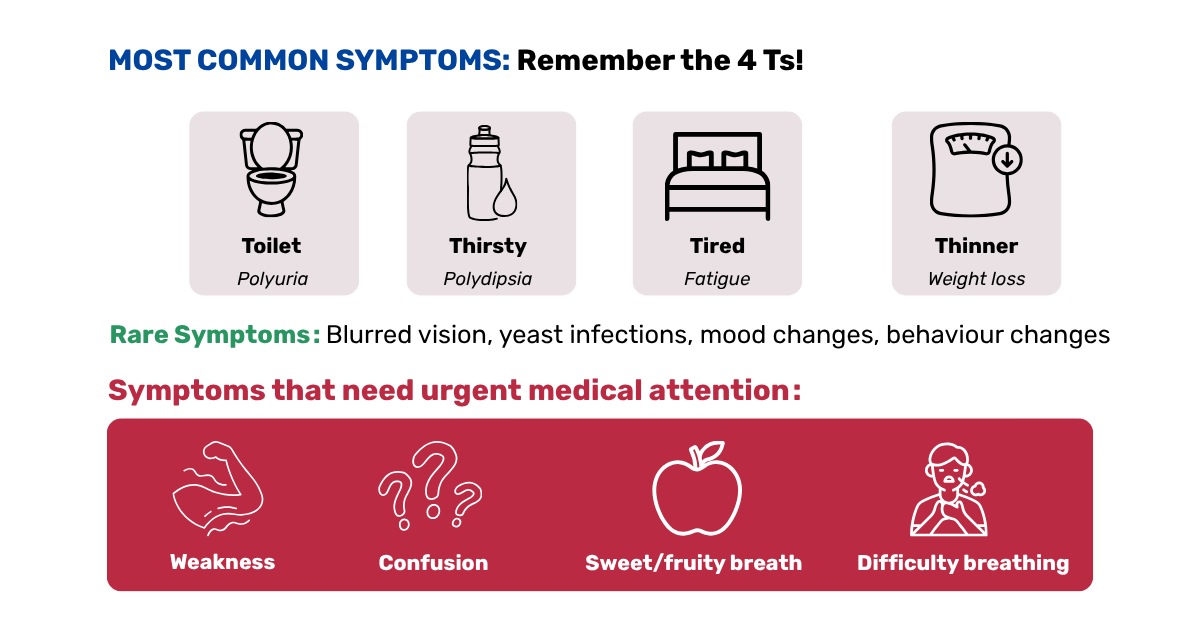
If symptoms of hyperglycemia are noted, immediate glucose testing is required. This can be performed using a point-of-care glucose test, urinalysis for glucose and ketones, or a laboratory test that provides rapid same-day results. If abnormalities are detected, the patient should be referred urgently to a local pediatric diabetes program or emergency care. Delays in diagnosis and the initiation of insulin therapy increase the risk of diabetic ketoacidosis (DKA).
For the antibody arm, patients with “positive” antibody results (2 or more autoantibodies) will be offered follow up (e.g. through regular metabolic monitoring to assess for progression to diabetes). If they do not wish to participate in our monitoring program, it may be helpful for you to be aware of what follow-up monitoring would be recommended in routine clinical practice. Click here to learn more.
IMPORTANT: These results were obtained as part of a research study and are not clinically validated. They should NOT be recorded as part of the patient’s medical record, as doing so may have potential insurance implications for them.
Interpreting Your Patient’s Results
Guidance on result interpretation is available through the following resources:
- FAQs for general interpretation support.
- Post–Autoantibody Testing Leaflet for more in-depth information on autoantibody results. This includes information on next steps for families with or without a previous GRS result and the follow-up recommended for children with 0, 1, or 2+ autoantibodies.
- Genetic Counselling Webinar Slides for more in-depth information on genetic risk results. This includes information about the genetic risk score, statistical information regarding progression to antibody development, and detailed information regarding what autoantibodies are and how we test for their presence.
- Statistics of Screening document for a practical reference guide to current statistics and interpretation guidelines for genetic risk score and autoantibody screening results in children.
What Happens Next for Your Patient
Follow-up steps depend on the patient’s screening results. Participants may be invited to complete additional assessments or monitoring.
You can review the participant pathways here:
- Genetic Risk Score (GRS) Journey – for newborns at age of enrolment.
- Autoantibody Testing (AB) Journey (coming soon) – for children 18 months and older at age of enrolment.
Support Available for Patients and Families
For patients with increased genetic risk or positive autoantibody results, CanCHECK-T1D offers:
- Direct follow-up calls with families to explain increased genetic risk or positive autoantibody results.
- Educational materials tailored to their results.
- Access to genetic counselling services.
- A metabolic monitoring program, for children with 2 or more autoantibodies, to track risk of progression to clinical T1D.
Contact the CanCHECK-T1D Team
If you have questions about your patient’s results, follow-up steps, or the screening program:
Phone: +1 (866)-813-5190
Email: cancheckt1d@cheo.on.ca
CanCHECK-T1D Materials to Promote T1D Risk Screening in Your Practice
Help spread the word about our T1D risk screening program! We have developed a range of digital and print-ready resources to help you raise awareness of CanCHECK-T1D within your community:
- Email template to share with your patient network.
- A4 poster for display in your clinic or institution.
- Postcard for distribution.
The posters are designed for convenient in-house printing. If your printing capacity is limited, we also offer a select supply of printed materials that can be mailed directly to your clinic or institution. To request our materials, please call us at +1 (866)-813-5190 or email us at canscreen.t1d@sickkids.ca.
Thank you for supporting our initiative!