What you will learn in this section:
- The genetic risk score test uses blood that has already been collected from your baby at birth.
- The test is free.
- You can decide to have your child’s blood tested or not.
- About 100 in every 1000 babies will be identified as being at higher risk for type 1 diabetes and eligible for follow-up.
- About 3 in every 1000 babies will develop type 1 diabetes.
- Families whose babies are identified as being at higher risk will have access to more support to help them decide what to do next.
Genetic Risk Score
Your family is being offered a genetic risk score test. Genetic risk scores check many different genes to predict the chance of getting type 1 diabetes.
Your Family has Two Options: Choose to Have Your Child Tested or Not
If you choose to have your child tested, they do not need a new blood test. You just give permission to screen for risk of type 1 diabetes using the blood that was already collected when they pricked your baby’s heel after birth. The test is free.
The genetic test can be done as early as one month after birth and up to six months after birth. It tells you whether your baby is in the top 10% of genetic risk.
There Are 2 Possible Genetic Test Results
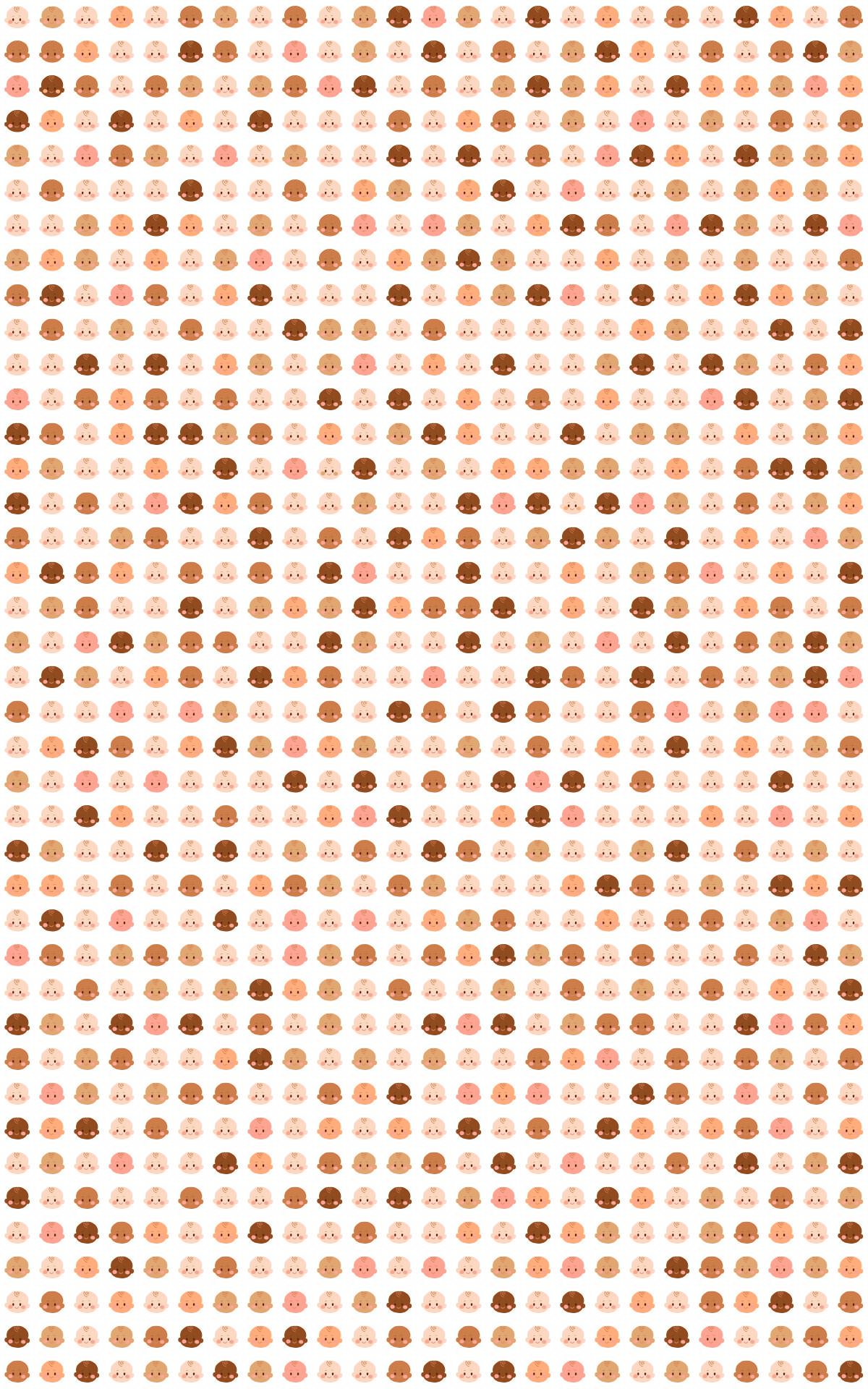
For every 1000 babies tested:
900/1000
Result 1: Lower Risk
It is very unlikely (but not impossible) that these babies will ever develop type 1 diabetes.
100/1000
Result 2: Increased Risk and Eligible for Follow-up
Based on studies in other countries, about 3 of these babies will develop type 1 diabetes.
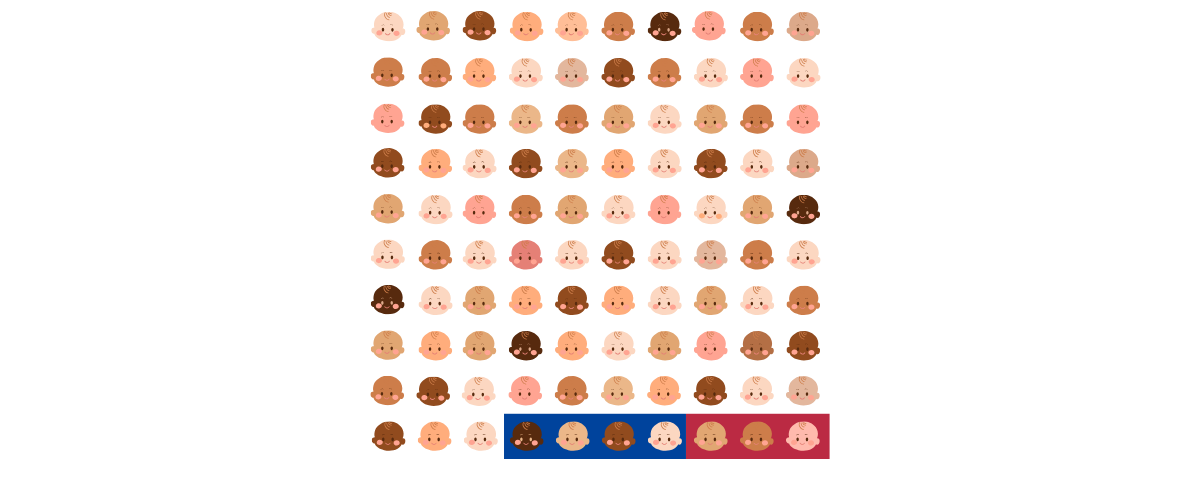
For every 100 babies which will get this result, about
3/100
will eventually get type 1 diabetes one day even though we don’t know when.*
*The 4 blue icons represent babies who will develop one antibody for type 1 diabetes. Children who have one antibody may or may not develop type 1 diabetes.
The 3 red icons represent babies who will develop two or more antibodies for type 1 diabetes. Children who have two or more antibodies will almost certainly develop type 1 diabetes at some point in their lifetime, but we don’t know when.
If your baby is among the 100 out of every 1000 at higher risk for type 1 diabetes, you can then have them tested for antibodies when they turn one year old. You will also be invited to a webinar with a genetic counsellor (an expert in genetics who helps people understand genetic tests) who can answer your questions about your baby’s test.
Key points of section 3 (genetic risk score):
- The genetic risk score test uses blood that has already been collected from your baby at birth.
- The test is free.
- You can decide to have your child’s blood tested or not.
- About 100 in every 1000 babies will be identified as being at higher risk for type 1 diabetes and eligible for follow-up.
- About 3 in every 1000 babies will develop type 1 diabetes.
- Families whose babies are identified as being at higher risk will have access to more support to help them decide what to do next.