What you will learn in this section:
- Among children, type 1 diabetes is the most common kind of diabetes.
- Among everyone (adults and children together), type 1 diabetes is a less common kind of diabetes than type 2 diabetes.
- Type 1 diabetes happens when the body’s immune system mistakenly attacks cells in the pancreas.
- Even though there is a genetic risk for type 1 diabetes, most people who get type 1 diabetes are the only person in their family with it. This is because you can have the genetic risk but never get type 1 diabetes.
- All children may be at risk for type 1 diabetes, even if they don’t have any close relatives with the condition.
Did You Know There Are Many Kinds of Diabetes?
You’ve probably heard of diabetes. You may even know people who live with it.
But did you know that there are different kinds of diabetes?
Type 2 Diabetes is the Most Common Kind of Diabetes
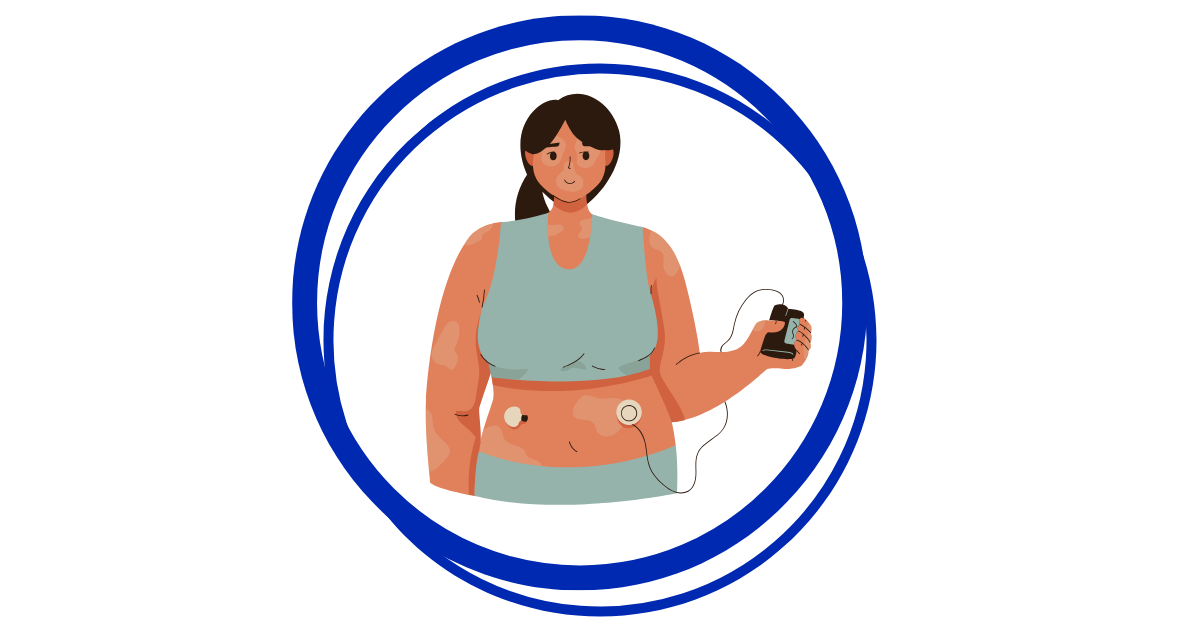
The most common kind is type 2 diabetes. Type 2 diabetes happens when the body starts having trouble using insulin. Insulin is a hormone that allows the body to use sugar from food as energy or store it for later.
When the body starts having trouble using insulin, the pancreas starts making more and more insulin, and eventually it may not be able to keep up.
Type 2 diabetes can happen at any age and to people with any body type, but it is most common among people who are older, who have extra weight, and who have type 2 diabetes in their family. People with type 2 diabetes may control their condition with diet, exercise, pills, or injections. Some of them take insulin.
Type 1 Diabetes is a Less Common Kind of Diabetes
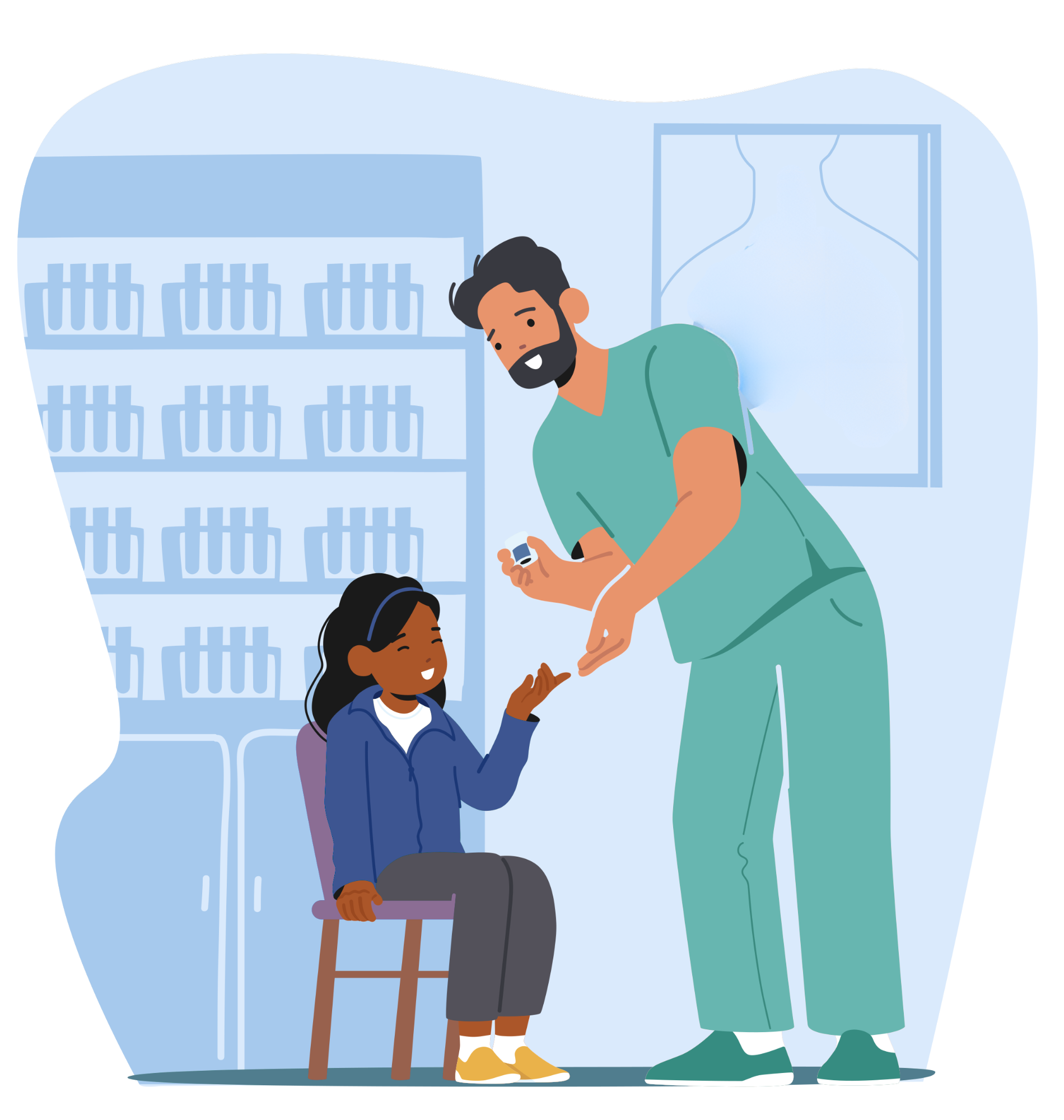
A less common kind of diabetes is type 1 diabetes. Type 1 diabetes happens when the immune system attacks insulin-producing cells in the pancreas.
Unlike people with type 2 diabetes, people with type 1 diabetes can respond to insulin just fine, but their pancreas doesn’t make any.
As a result, people with type 1 diabetes always need to take insulin, either through injections or using a pump.
Type 1 diabetes can happen at any age, but most people are diagnosed by age 30, and many new cases are children–some as young as six months old.
Having a family member with type 1 diabetes increases the risk of developing the condition, but because it isn’t very common, about 85-90% of people with type 1 diabetes are the only person in their family with it (Besser et al., 2022).
Genetics + Environmental Factors = Type 1 Diabetes
We don’t know exactly what causes type 1 diabetes.
Type 1 diabetes is pas caused by eating too much sugar.
The best available scientific evidence so far suggests that type 1 diabetes happens when people who have a genetic risk for the condition are exposed to something that triggers the immune system to start attacking cells in the pancreas.
We don’t know for sure what triggers the immune system to start this attack. Evidence suggests it might be viruses or other infections. The microbiome (small bugs) in the gut may also play a role.
We also know that type 1 diabetes affects more people in some countries than in others. Cliquez ici pour en savoir plus.
Other Types of Diabetes Also Exist
- Gestational diabetes is a temporary condition that happens during pregnancy. People who have gestational diabetes are at higher risk of developing type 2 diabetes later.
- Latent autoimmune diabetes in adults (LADA) may actually be type 1 diabetes but is diagnosed in older people. It tends to come on more slowly and may be misdiagnosed as type 2 diabetes. People with LADA can sometimes go for a while without needing to take insulin, but eventually, they will need insulin just like people with type 1 diabetes. Many people with LADA use the same treatments and technologies as people with type 1 diabetes.
- Maturity-onset diabetes of the young (MODY) is a group of genetic conditions caused by a change in a single gene. MODY usually starts before age 30. Depending on which gene is impacted, the diabetes may be quite different. Some types of MODY are very mild and don’t need treatment. Others can be misdiagnosed as type 1 diabetes, but tablets work better than insulin for the people with these types. In other forms, people can’t make enough insulin and need treatments like people with type 1 diabetes. MODY is often misdiagnosed as type 1 or type 2 diabetes, but a strong family history of diabetes and the absence of autoantibodies are key indicators.
- Type 3c diabetes happens when people’s pancreas is damaged or removed, reducing or removing their ability to make insulin. People with type 3c diabetes are typically treated as though they have type 1 diabetes and use the same treatments and technologies.
Comparing Type 1 and Type 2 Diabetes
Le diabète de type 1 |
Type 2 Diabetes |
|
|---|---|---|
| What kind of condition is it? | Autoimmune condition | Metabolic condition |
| Can children get it? | Yes. When a child in Canada is diagnosed with diabetes, it is usually type 1 diabetes. | Yes, but it’s unusual. When a child in Canada is diagnosed with diabetes, it is usually not type 2 diabetes |
| How common is it? | About 5-10% of all cases of diabetes are type 1. | About 90-95% of all cases of diabetes are type 2. |
| Why does it happen? | The immune system attacks cells in the pancreas that make insulin. | Cells in the body start to have trouble responding to insulin and become “insulin-resistant.” |
| Will the person need to take insulin? | Yes, always. | Sometimes. |
| When does it happen? | It can happen at any age, but commonly happens before age 30, often in childhood. | It can happen at any age, but most commonly happens among older people. |
| Does it run in families? | Yes. However, because type 1 is fairly rare, you won’t always know that it’s in your family. About 85-90% of people with type 1 diabetes are the only one in their family. | Yes. And because type 2 diabetes is fairly common, if you have a family history of type 2 diabetes, you’ll often have relatives with it. |
| Who is at higher risk? | People who have a close family member (parent, sibling, aunt/uncle) with type 1 diabetes have a 15 times greater risk of developing type 1 diabetes.
Genetic factors can also give people an increased risk of developing type 1 diabetes. Genetic factors can be determined with a genetic test. People with related autoimmune conditions like celiac disease may also be at higher risk. (And people with type 1 diabetes are at higher risk of celiac disease and autoimmune thyroid disease, as well as other diseases.) |
People who have family members with type 2 diabetes are at higher risk.
People who have extra weight or obesity, or who have other metabolic conditions are at higher risk of developing type 2 diabetes. People in Canada of African, Arab, Asian, Hispanic, Indigenous or South Asian descent are at higher risk of developing type 2 diabetes than people with other backgrounds. People who had gestational diabetes during pregnancy or whose mother had gestational diabetes during pregnancy may also be at higher risk of type 2 diabetes. |
| Is it preventable? | Not yet. There is a new preventive treatment (teplizumab) that may delay its onset, but it needs to be taken before too many insulin-producing cells are destroyed. | Sometimes yes. By reducing their weight and becoming more active, some people are able to prevent type 2 diabetes, at least for a while. Some people do everything “right” and still develop it. |

Key points of section 1:
- Among children, type 1 diabetes is the most common kind of diabetes.
- Among everyone (adults and children together), type 1 diabetes is a less common kind of diabetes than type 2 diabetes.
- Type 1 diabetes happens when the body’s immune system mistakenly attacks cells in the pancreas.
- Even though there is a genetic risk for type 1 diabetes, most people who get type 1 diabetes are the only person in their family with it. This is because you can have the genetic risk but never get type 1 diabetes.
- All children may be at risk for type 1 diabetes, even if they don’t have any close relatives with the condition.